The Kenya vs Uganda safari decision is one of the most common questions in East African travel planning. Both countries appear in the same conversations, the same bucket lists, and sometimes the same itinerary. But they deliver fundamentally different experiences: different terrain, different wildlife, different physical demands, and different kinds of stories you bring home.
What Each Country Delivers
Kenya: Open Savannah, Big Five, and the Great Migration
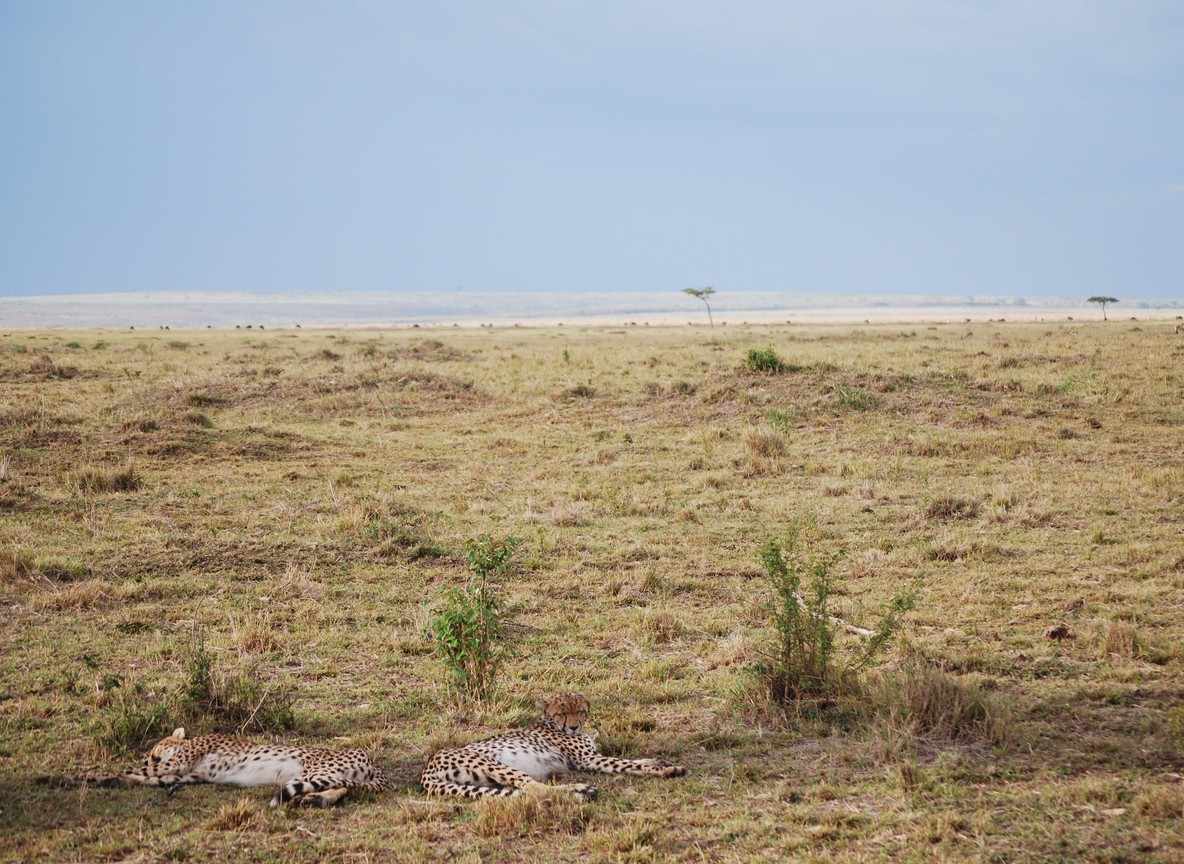
Kenya’s safari identity is built on open savannah game drives. You move through wide grasslands in a 4×4 vehicle, scanning for lions, elephants, leopards, Cape buffalo, and rhinos. The Masai Mara National Reserve and its surrounding private conservancies form the country’s most famous safari circuit. Between July and October, more than 1.5 million wildebeest cross the Mara River during the annual Great Migration, one of the largest animal movements on the planet.
The country offers considerable diversity beyond the Mara. Amboseli frames elephant herds against the snowcapped peak of Kilimanjaro. Samburu in the north holds species found nowhere else in Kenya: Grevy’s zebra, reticulated giraffe, and Somali ostrich. Lake Nakuru is a rhino sanctuary with flamingo colonies along its shoreline.
Game drives in Kenya are accessible to nearly every traveler. You sit in a modified Land Cruiser with the roof hatch open while a guide works the terrain. The physical demand is low. Children are welcome in most national parks, and family safari camps are widely available.
The Kenya coast offers a natural extension. A week on safari followed by several days at the beach is a popular itinerary structure, and internal flights from Nairobi take under an hour.
Uganda: Gorillas, Chimps, and Dense Forest
Uganda’s headline experience is mountain gorilla trekking in Bwindi Impenetrable National Park. A ranger and tracker lead a group of no more than eight visitors through dense equatorial forest. The trek can take two hours or five, depending on where the gorillas have moved that morning. When the group reaches a habituated family, visitors are given one hour of quiet, close observation. The gorillas show little concern at human presence. The experience is physically demanding and produces nothing like a vehicle game drive.
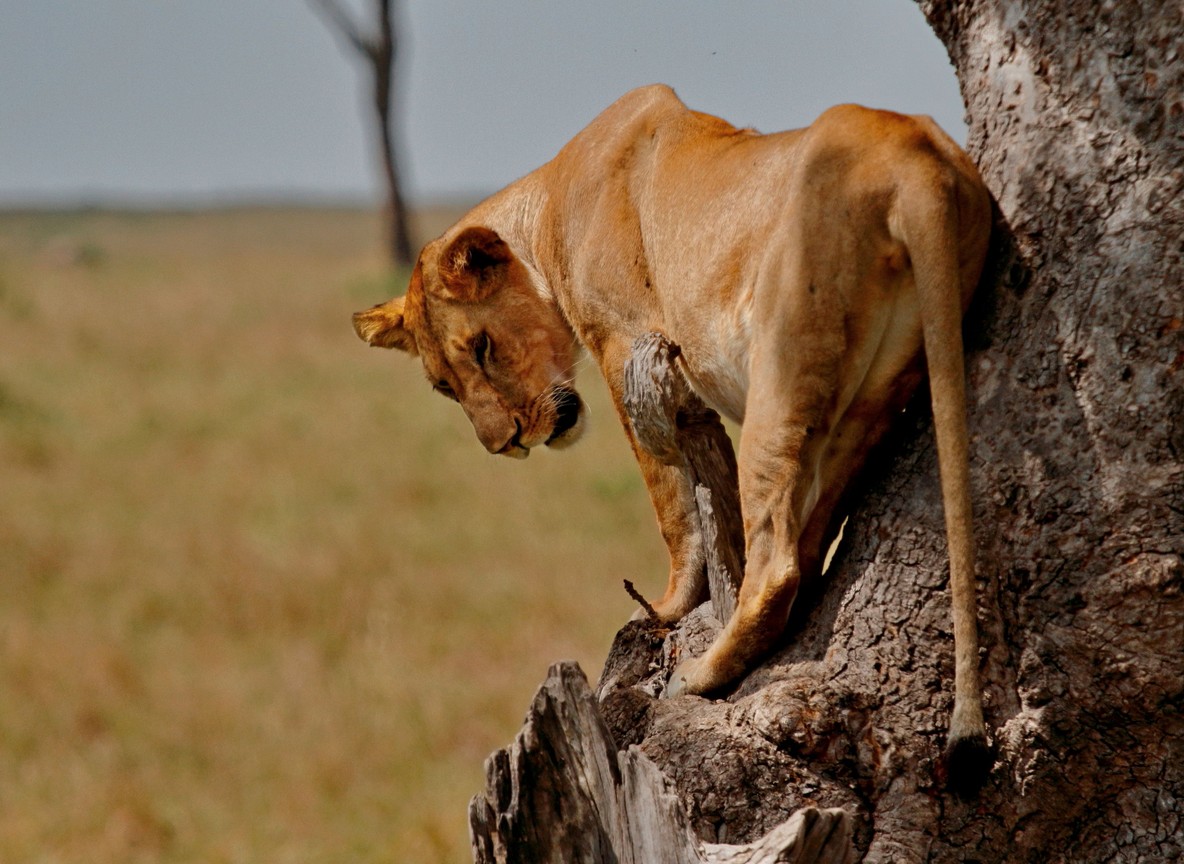
Uganda also offers chimpanzee tracking in Kibale National Park, which holds one of the highest concentrations of chimpanzees in Africa. Queen Elizabeth National Park is notable for its tree-climbing lions, a behaviour seen in very few places on the continent. The Mabamba Swamp near Entebbe is one of the most reliable locations in the world to find the shoebill stork.
Uganda’s bird list exceeds 1,000 species. For serious birders, the country is exceptional.
The terrain throughout southwestern Uganda is steep, wet, and physically demanding. Gorilla trekking requires a reasonable level of fitness. It is not suitable for travelers with limited mobility, and the minimum age for participation is 15.
Kenya vs Uganda Safari: Costs and Permits
Kenya Safari Costs
Kenya safari costs vary by accommodation and service tier:
- Budget: $150 to $250 per person per day, shared game drives, mid-range camps
- Mid-range: $300 to $600 per person per day, private game drives, quality camps
- Luxury: $700 to $2,000-plus per person per day, exclusive conservancy camps
Masai Mara National Reserve charges approximately $80 per adult per day in park fees. Private conservancy access adds $40 to $120 per day. Domestic flights from Nairobi’s Wilson Airport to the Mara cost $150 to $200 one way.
Uganda Safari Costs
Uganda’s cost structure is anchored by the gorilla permit, which costs $700 USD per person per trek. This fee is set by the Uganda Wildlife Authority and is non-negotiable. Permits must be booked well in advance, often six months or more for peak-season dates.
Accommodation near Bwindi ranges from mid-range lodges at $150 to $300 per person per night to high-end forest camps above $500. A 7-day Uganda safari combining gorilla trekking and chimpanzee tracking typically costs $3,500 to $7,000 per person all-in, including the permit.
The East Africa Tourist Visa covers Kenya, Uganda, and Rwanda under a single fee of $100 USD. If your itinerary crosses more than one country, this visa is worth using.
Logistics Side by Side
| Factor | Kenya | Uganda |
|---|---|---|
| Main international airport | Nairobi JKIA | Entebbe International |
| Direct flight connections | London, Amsterdam, Dubai, Doha | London, Addis Ababa, Nairobi, Kigali |
| Internal flights | Frequent, 30 to 90 minutes from Nairobi | Charter flights to Kihihi or Kisoro for Bwindi |
| Road travel time to key park | Nairobi to Masai Mara: 5 to 7 hours | Entebbe to Bwindi: 7 to 9 hours |
| Terrain | Open plains, variable but manageable roads | Steep forest paths; 4×4 required in the southwest |
| Visa | Kenya eTA processed online before travel | Uganda e-Visa or on arrival; East Africa Tourist Visa available |
Wildlife Coverage at a Glance
| Species | Kenya | Uganda |
|---|---|---|
| Mountain gorilla | Not present | World-class trekking (Bwindi) |
| Chimpanzee | Rarely seen | High density (Kibale) |
| Lion | Excellent (Masai Mara) | Present; tree-climbing variety (Queen Elizabeth) |
| Elephant | Excellent (Amboseli, Tsavo) | Present (Queen Elizabeth) |
| Leopard | Good (Masai Mara, Samburu) | Present but infrequently spotted |
| Rhino | Good (Ol Pejeta, Lake Nakuru) | Very rare (Ziwa Rhino Sanctuary) |
| Great Migration | Yes, July to October | Not applicable |
| Shoebill stork | Rare | Reliable (Mabamba Swamp) |
| Bird species | 1,100-plus | 1,000-plus |
Which Traveler Each Country Suits
Kenya is the stronger fit if you:
- Are visiting East Africa for the first or second time and want iconic savannah game drive moments
- Are traveling with children or older family members
- Prefer vehicle-based wildlife viewing without steep physical exertion
- Want a trip that combines safari with beach
- Have 5 to 10 days and want maximum wildlife variety across multiple ecosystems
Uganda is the stronger fit if you:
- Have already experienced classic African game drives and want something structurally different
- Feel a strong pull toward primate encounters and forest environments
- Are physically fit and comfortable hiking in steep, wet terrain for several hours
- Can absorb the gorilla permit cost within your budget
- Want small-group, intimate encounters far from high-traffic parks
A 14-Day Combined Outline
- Days 1 to 4: Masai Mara National Reserve and private conservancies (Kenya). Big Five, migration crossings, optional early morning balloon flight.
- Days 5 to 6: Nairobi transit, domestic and international connections.
- Days 7 to 10: Bwindi Impenetrable Forest (Uganda). Mountain gorilla trekking with habituated families.
- Days 11 to 12: Kibale National Park (Uganda). Full-day chimpanzee tracking.
- Days 13 to 14: Queen Elizabeth National Park (Uganda). Kazinga Channel boat cruise, tree-climbing lions.
The East Africa Tourist Visa covers movement between Kenya and Uganda on a single document.
Explorer Notes
Book gorilla permits as early as possible. The Uganda Wildlife Authority allocates a fixed number of permits per gorilla family per day. Availability in peak months (June to September, December to January) can run out six months or more ahead. Budget flexibility does not solve a sold-out permit date.
Minimum age for gorilla trekking is 15. Families traveling with younger children should plan the gorilla experience for a future trip and prioritise Kenya for the current one.
Factor in altitude at Bwindi. The forest sits between 1,900 and 2,500 metres above sea level. The combination of altitude and sustained uphill hiking surprises some visitors. Travelers with respiratory concerns should discuss this with a doctor before booking.
Kenya’s shoulder season offers value. April to June is Kenya’s long rainy season. Park fees and accommodation rates are lower, vegetation is green, and resident game remains consistent. The Mara River wildebeest crossings do not happen in this window, but the wildlife experience is otherwise strong.
Consider Rwanda if gorillas are your primary focus. Volcanoes National Park in Rwanda offers mountain gorilla trekking at $1,500 USD per permit. Rwanda’s permits are harder to secure but the country is compact, and the East Africa Tourist Visa covers both Uganda and Rwanda on one document.
Putting It Together
The Kenya vs Uganda safari question comes down to the type of encounter you are prioritising. Kenya delivers the most complete open savannah experience in East Africa: reliable Big Five sightings, a landscape of extraordinary scale, and logistical accessibility that suits visitors at any stage of their Africa travels.
Uganda delivers something more specific: a face-to-face hour with mountain gorillas in dense equatorial forest. No vehicle game drive replicates that encounter. The trade-off is a higher permit cost, a more physically demanding trip, and a narrower window of iconic moments.
Both destinations are worth a place on any East Africa itinerary. If the schedule allows two weeks, the combination covers the most distinct wildlife experiences on the continent in one trip. If not, identify your primary wildlife ambition first and build from there.
Have questions about this itinerary or destination? Get answers from a safari specialist before you commit.
Inquire More